
Plumbing service
Drain Cleaning in Fuquay-Varina
From slow kitchen sinks to main line backups, we find the clog and clear it.
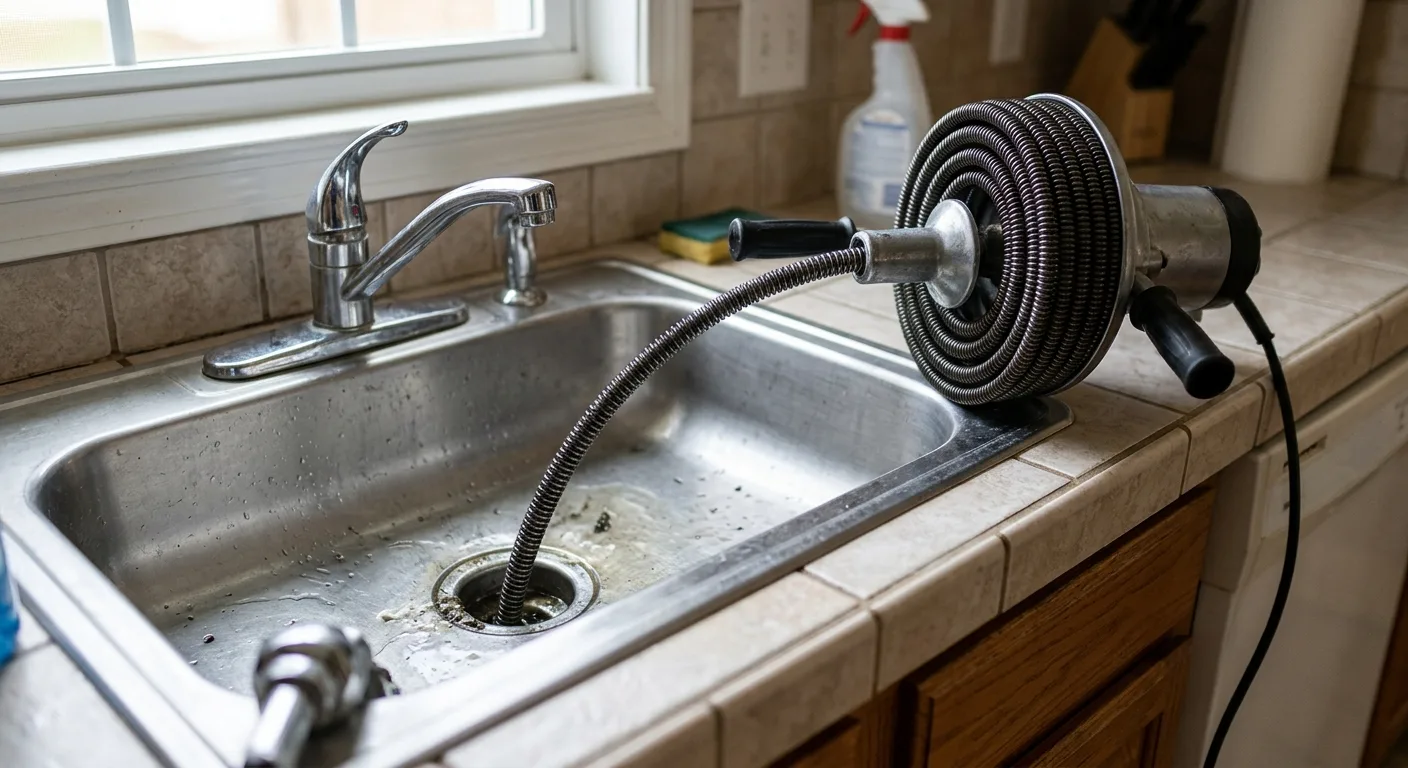
Drain Cleaning
Drain Cleaning Fuquay-Varina Homeowners Rely On
Crystal Waters Plumbing provides drain cleaning in Fuquay-Varina, NC for homeowners dealing with slow drains, recurring clogs, and full backups. Call (910) 812-9786 and you'll reach Josh directly, no dispatch center, no hold music. We diagnose the problem before we start cutting into anything, and we clear the line the right way the first time around.
What drives the cost of a drain cleaning job is usually what's already inside the line: grease buildup, root intrusion, mineral scale, or a collapsed section of pipe. A fixture clog at a bathroom sink is a different job than a sewer line that's collecting roots from your yard oaks. We'll tell you which one you have before we quote you anything. Every job is different. Contact Crystal Waters Plumbing for an accurate estimate.
What Drain Cleaning Covers
All plumbing services- Drain snaking for fixture clogs, sinks, tubs, showers, floor drains
- Hydro jetting for grease buildup, scale, and recurring blockages
- Camera inspection to locate the exact problem before we dig or cut
- Main sewer line cleaning and root intrusion clearing
- Diagnosis: fixture clog vs. main line backup, before any work starts
The Local Problem
Why Fuquay-Varina Drains Clog Faster Than You'd Expect
Local soil, older pipe materials, and fast growth all create drain problems specific to this area.
Clay Soil and Root Intrusion
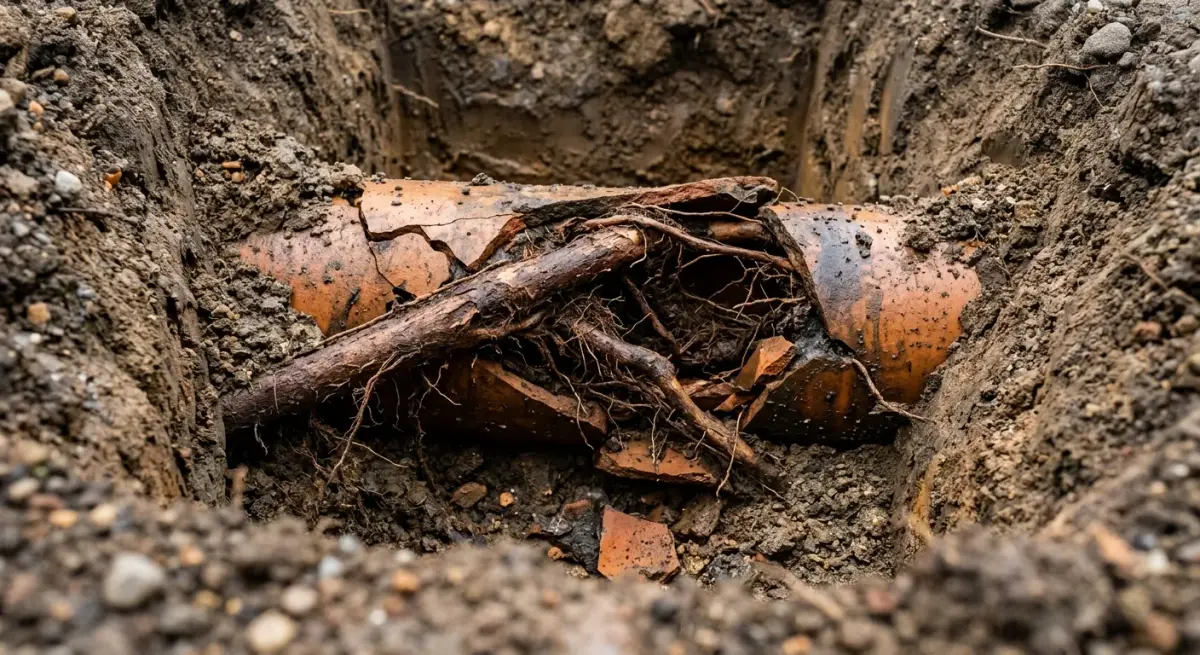
Wake County's clay-heavy soil holds moisture right against your sewer lines. Tree roots follow that moisture. Once a root finds a joint or a hairline crack in an older clay or cast iron line, it doesn't stop growing. We see this constantly in established neighborhoods around Fuquay-Varina.Pre-1990s Pipe Materials
Homes built before 1990 in this area often have cast iron or Orangeburg sewer pipe. Both degrade over time. Orangeburg especially, it absorbs moisture, flattens, and starts trapping solids. If your drains have been slow for years and snaking only fixes it temporarily, the pipe material itself may be the issue.New Construction, Old Problems
Fuquay-Varina is one of the fastest-growing towns in North Carolina. New subdivisions mean new connections to the main sewer, and those connections aren't always perfect. Construction debris, improper grading, and green lumber that shrinks at joints. We've seen all of it in homes less than five years old.Spring Rain and Seasonal Surges
Central NC gets heavy spring rains. If your yard drains poorly and water is pooling near your foundation, it's pushing hydrostatic pressure against your drain lines. That accelerates cracking and joint separation. A slow drain after every hard rain isn't a coincidence. It's a symptom.
The Method
Snaking vs. Hydro Jetting: Which One You Actually Need
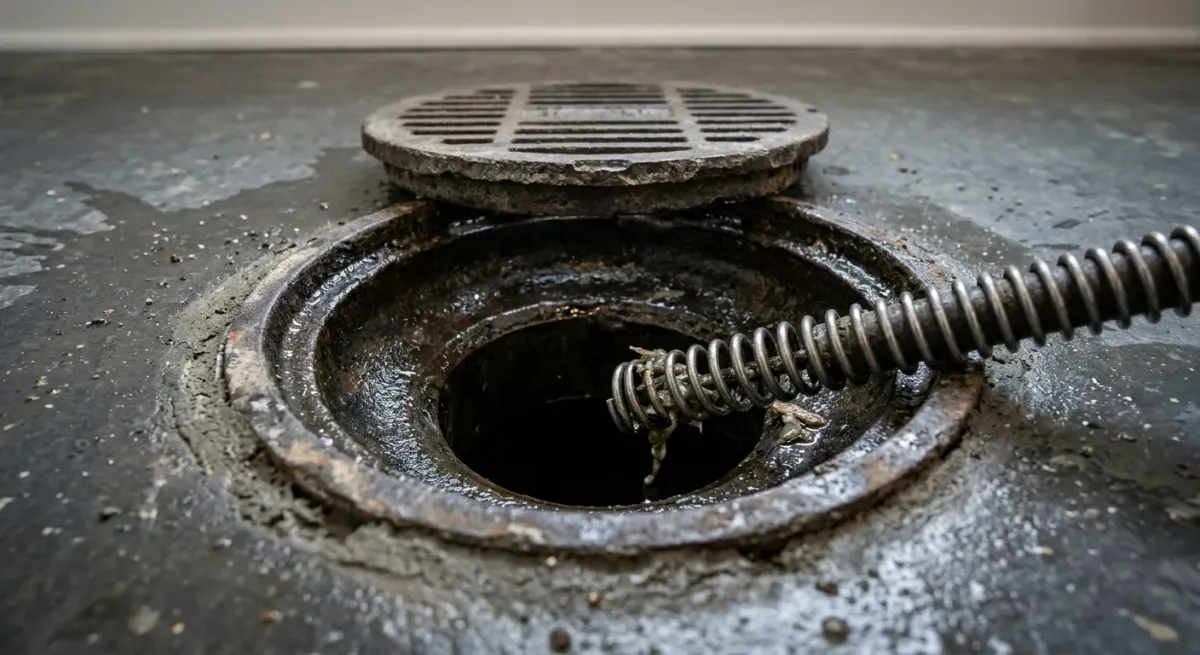
A drain snake breaks up a clog and pulls it out. That works fine for a hair clog at a bathroom drain or a grease plug close to the fixture. It's fast, it's affordable, and for most simple clogs it's all you need.
Hydro jetting is different. It fires water at up to 4,000 PSI through a specialized nozzle that scours the inside walls of the pipe. Not just punches a hole through the clog. If you've got years of grease buildup in a kitchen line, or root threads weaving through a main sewer, snaking clears a path but doesn't clean the pipe. The clog comes back in weeks. Hydro jetting cleans the pipe wall-to-wall.
Honestly, you don't need hydro jetting for every clog. We'll tell you when snaking is the right call and when it's just delaying the real fix. Any plumber who recommends jetting on every job without running a camera first is selling you work you may not need.
How it works
How We Diagnose a Drain Problem
Identify: Fixture or Main Line?
One slow drain usually means the clog is local, at or near that fixture. Multiple slow drains, gurgling toilets, or sewage smell anywhere in the house usually means the main line. We ask the right questions before we touch anything.
Camera Inspection When Needed
If the problem keeps coming back, or if snaking doesn't fully clear it, we run a camera down the line. That shows us root intrusion, pipe damage, scale buildup, or a low spot that's holding solids. No guessing.
Clear It and Confirm It
We clear the line using the right method for what we found, snake, jetter, or both. Then we confirm flow is restored before we leave. If the camera showed a damaged section, we'll tell you exactly what it needs and what that pipe repair involves.
Chemical Drain Cleaners: Why Plumbers Don't Use Them
Store-bought drain cleaners, the liquid or gel kind, work by generating heat through a chemical reaction to dissolve organic material. The problem is they don't stop reacting when the clog clears. In older pipes, repeated use softens PVC, corrodes metal fittings, and eats away at rubber seals. We've pulled apart bathroom plumbing joints that look like they were exposed to acid, because they were. Beyond the pipe damage, the chemicals left in your drain end up in the wastewater system.
For a minor, one-time slow drain, a drain snake or a cup plunger is a better first move than chemicals. If you've already poured something down the drain before calling us, tell us, it matters for how we approach the job safely.
FAQ
Drain Cleaning Questions We Hear Most
Is hydro jetting worth the cost compared to traditional snaking?
Why do plumbers say not to use drain cleaner?
What's the difference between drain cleaning and sewer line cleaning?
How do I know if I have a main sewer line clog vs. a fixture clog?
Is professional drain cleaning worth it?
How often should I have my drains professionally cleaned?
How long does hydro jetting take?

Next step
Call a Fuquay-Varina Plumber Who Answers
(910) 812-9786 goes straight to Josh. Not a call center. Not a franchise dispatch. We serve Fuquay-Varina and the surrounding area including Willow Spring, Coats, Raleigh, and Cary. Licensed and insured.
Plumbing problem right now? Call us first.
Prefer to write?
Tell us about the job
Your name, your number and what needs doing. A person from Crystal Waters Plumbing gets back to you.